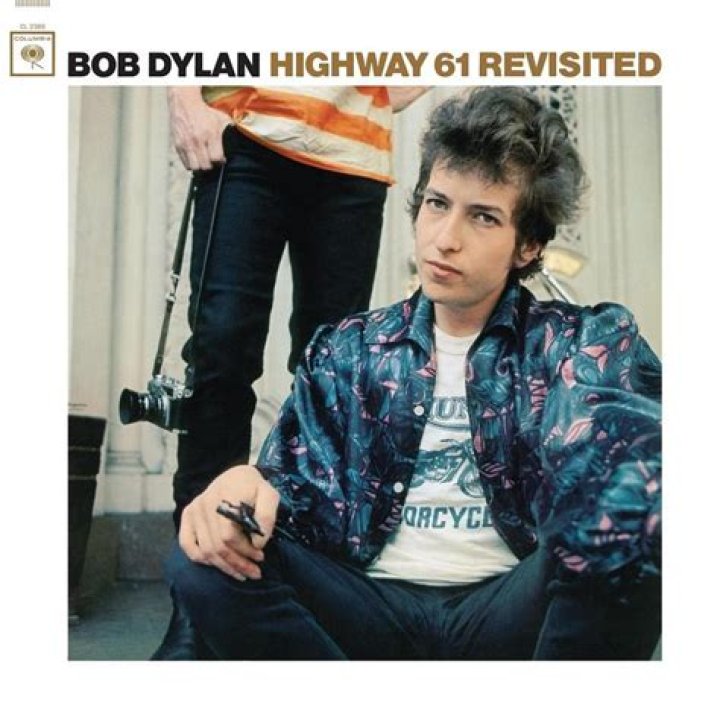
US Highway 61, also known as The Blues Highway, starts in New Orleans, heads north up through Mississippi, Memphis and St. Louis, and ends in Minnesota. Prior to 2004, when part of its numbering was changed, it ran up through Duluth to the Canadian border. Near Duluth, it ran through Hibbing, Bob's hometown.
Highway 61 enjoyed a significant history in the Blues. Several musicians recorded songs about Highway 61. It was the road that they traveled from New Orleans and Mississippi north to musical outposts like Memphis and St. Louis, where their music became electrified and spread to a larger audience. It was the intersection of Memphis Blues, Southern Gospel and Tennessee Country Music, as interpreted by a young truck driver named Elvis Presley, that gave birth to Rock and Roll itself.
In addition to these happenings, Highway 61 played an important role even in what many consider the greatest Blues song ever. written. Robert Johnson's Crossroads takes place in Clarksdale, Mississippi, at the intersection of Highways 61 and 49. The legend has it that Robert sold his soul to The Devil at this spot one Midnight long ago.
As if that wasn't enough, Highway 61 has personal meaning to Bob. It was the road he took out of Minnesota on his way to New York, where his career began.
This brings us to the album at hand. Having gone through many changes along with his country, the traveling minstrel returns to the famous road after several years, and describes what he sees. And it isn't pretty.
Highway 61 as an image now focuses on Mississippi, the heart of bigotry and hatred in America. Bob uses the road as a symbol for Man's inhumanity to Man. If you're involved in something horrible, and everybody hates you and condemns you, there's always a place for you on Highway 61.
"Oh God said to Abraham, kill me a son
Abe says, Man, you must be puttin’ me on
God say, No. Abe say, What?
God say, You can do what you want Abe, but
The next time you see me comin’ you better run
Well Abe says, Where do you want this killin’ done?
God says, Out on Highway 61”
It all starts with The Good Book. Right in Genesis, God Himself orders Abraham to commit a horrible act. Bob, however, creates an interesting contrast, possibly informed by his devotion to protest. While the Biblical Abraham obeys without complaint, his modern counterpart is more resistant, to say the least. So, says Bob, even if we are not inclined to evil acts, we're willing to do them because we believe God is on our side. How much slaughter, pain and misery has Man suffered throughout history in the name of religion? And where does it continue today, with the KKK and other "Christian" groups? Out on Highway 61.
"Well Georgia Sam he had a bloody nose
Welfare Department they wouldn’t give him no clothes
He asked poor Howard where can I go
Howard said there’s only one place I know
Sam said tell me quick man I got to run
Ol’ Howard just pointed with his gun
And said that way down on Highway 61"
Georgia Sam was a performing name used by Blind Willie McTell. He was a great Georgia Bluesman who led a very sad life, singing on an Atlanta street corner in his old age. Poor Howard is the name of a song by Leadbelly about another poor traveling musician (read the lyrics here). There was one key difference between the two: Howard was white and Sam was black. So this is a conversation between two poor souls who have everything in common except for their skin color.
Sam is in bad shape: beaten up, no government help, being chased, probably by a lynch mob. Sam thinks Howard will help him, since they have so much in common. But he's in for a nasty surprise: Howard sides with the angry mob. He may be the same as Sam economically, but ethnically, he has a lot more in common with Sam's enemies. Instead of helping Sam, Old Howard points his gun at him and sends him off to Highway 61.
"Well Mack the Finger said to Louie the King
I got forty red, white and blue shoestrings
And a thousand telephones that don’t ring
Do you know where I can get rid of these things
And Louie the King said let me think for a minute son
And he said yes I think it can be easily done
Just take everything down to Highway 61"
Now the scene moves to Europe. Mack the Finger is British Prime Minister Harold MacMillan, and Louie the King is French President Charles DeGaulle. Mack has problems in his country, which is in the midst of Beatlemania and Swinging London. It's the conflict between parents and children. The ties that used to bind families (the shoestrings -- Britain, France and the United States all have the same national colors) are now useless. The telephones, which represent communication, don't ring -- the two generations can't speak to each other.
While all this is going on in England, things are quiet in France. Mack wants to know how Louie can have such peace in his country. Louie doesn't answer Mack directly, but instead sends him to Highway 61. In this case, the inhumanity is the refusal of parents and children to talk to each other.
"The rovin' gambler could be a lot of different characters up to no good. Knowing that Bob was fond of using card-playing imagery to represent sacred figures, I think he's Satan. Being bored is a reference to the book of Job, where God and Satan make a bet out of boredom. Their bet ends up destroying poor Job, who's done nothing to deserve such treatment. In fact he's in this mess precisely because he was such a good man. Highway 61, anybody?
But the verse is about something different, the Cold War. The Devil is trying to find a way to get World War III going. He needs to deceive the public so they'll be convinced to start another war. He finds a promoter to do the job. I'm going to go out on a limb here -- I think it's P. T. Barnum, risen from the dead (fell off the floor -- get it?). Barnum admits that this is a new challenge, having been dead for the last 75 years or so, but rises to the occasion. He will take the war and make it an entertainment event. This is an idea repeated through history, from throwing Christians to the lions on down. I don't think at this point we need to explain why it's taking place on Highway 61.
Thus ends our return visit to The Blues Highway. There were very few figures in Rock and Roll who could truly be called poets. Jim Morrison, maybe John Lennon, but Dylan was in a league all his own. I doubt we will ever see his equal.
The Set List
The Lyric Box
Highway 61 Revisited
Bob Dylan, 1965
Oh God said to Abraham, “Kill me a son”
Abe says, “Man, you must be puttin’ me on”
God say, “No.” Abe say, “What?”
God say, “You can do what you want Abe, but
The next time you see me comin’ you better run”
Well Abe says, “Where do you want this killin’ done?”
God says, “Out on Highway 61”
Well Georgia Sam he had a bloody nose
Welfare Department they wouldn’t give him no clothes
He asked poor Howard where can I go
Howard said there’s only one place I know
Sam said tell me quick man I got to run
Ol’ Howard just pointed with his gun
And said that way down on Highway 61
Well Mack the Finger said to Louie the King
I got forty red, white and blue shoestrings
And a thousand telephones that don’t ring
Do you know where I can get rid of these things
And Louie the King said let me think for a minute son
And he said yes I think it can be easily done
Just take everything down to Highway 61
Having made his way through All Along the Watchtower in one piece, and conquering The Doors and King Crimson, your friendly author thinks he can analyze anything. Not really, but I figured I'd give Dylan another shot.
Some say Blonde on Blonde was Dylan's greatest album, but for me, Highway 61 is the zenith. The amount of magic poured onto that single disc is just mind-boggling.
This is the title track, so it probably says something about the whole album. Let's start there.
US Highway 61, also known as The Blues Highway, starts in New Orleans, heads north up through Mississippi, Memphis and St. Louis, and ends in Minnesota. Prior to 2004, when part of its numbering was changed, it ran up through Duluth to the Canadian border. Near Duluth, it ran through Hibbing, Bob's hometown.
Highway 61 enjoyed a significant history in the Blues. Several musicians recorded songs about Highway 61. It was the road that they traveled from New Orleans and Mississippi north to musical outposts like Memphis and St. Louis, where their music became electrified and spread to a larger audience. It was the intersection of Memphis Blues, Southern Gospel and Tennessee Country Music, as interpreted by a young truck driver named Elvis Presley, that gave birth to Rock and Roll itself.
In addition to these happenings, Highway 61 played an important role even in what many consider the greatest Blues song ever. written. Robert Johnson's Crossroads takes place in Clarksdale, Mississippi, at the intersection of Highways 61 and 49. The legend has it that Robert sold his soul to The Devil at this spot one Midnight long ago.
As if that wasn't enough, Highway 61 has personal meaning to Bob. It was the road he took out of Minnesota on his way to New York, where his career began.
This brings us to the album at hand. Having gone through many changes along with his country, the traveling minstrel returns to the famous road after several years, and describes what he sees. And it isn't pretty.
Highway 61 as an image now focuses on Mississippi, the heart of bigotry and hatred in America. Bob uses the road as a symbol for Man's inhumanity to Man. If you're involved in something horrible, and everybody hates you and condemns you, there's always a place for you on Highway 61.
Oh God said to Abraham, “Kill me a son”
Abe says, “Man, you must be puttin’ me on”
God say, “No.” Abe say, “What?”
God say, “You can do what you want Abe, but
The next time you see me comin’ you better run”
Well Abe says, “Where do you want this killin’ done?”
God says, “Out on Highway 61”
It all starts with The Good Book. Right in Genesis, God Himself orders Abraham to commit a horrible act. Bob, however, creates an interesting contrast, possibly informed by his devotion to protest. While the Biblical Abraham obeys without complaint, his modern counterpart is more resistant, to say the least. So, says Bob, even if we are not inclined to evil acts, we're willing to do them because we believe God is on our side. How much slaughter, pain and misery has Man suffered throughout history in the name of religion? And where does it continue today, with the KKK and other "Christian" groups? Out on Highway 61.
Well Georgia Sam he had a bloody nose
Welfare Department they wouldn’t give him no clothes
He asked poor Howard where can I go
Howard said there’s only one place I know
Sam said tell me quick man I got to run
Ol’ Howard just pointed with his gun
And said that way down on Highway 61
Georgia Sam was a performing name used by Blind Willie McTell. He was a great Georgia Bluesman who led a very sad life, singing on an Atlanta street corner in his old age. Poor Howard is the name of a song by Leadbelly about another poor traveling musician (read the lyrics here). There was one key difference between the two: Howard was white and Sam was black. So this is a conversation between two poor souls who have everything in common except for their skin color.
Sam is in bad shape: beaten up, no government help, being chased, probably by a lynch mob. Sam thinks Howard will help him, since they have so much in common. But he's in for a nasty surprise: Howard sides with the angry mob. He may be the same as Sam economically, but ethnically, he has a lot more in common with Sam's enemies. Instead of helping Sam, Old Howard points his gun at him and sends him off to Highway 61.
Well Mack the Finger said to Louie the King
I got forty red, white and blue shoestrings
And a thousand telephones that don’t ring
Do you know where I can get rid of these things
And Louie the King said let me think for a minute son
And he said yes I think it can be easily done
Just take everything down to Highway 61
Now the fifth daughter on the twelfth night
Told the first father that things weren’t right
My complexion she said is much too white
He said come here and step into the light,
he says hmm you’re right
Let me tell the second mother this has been done
But the second mother was with the seventh son
And they were both out on Highway 61"
The rovin' gambler could be a lot of different characters up to no good. Knowing that Bob was fond of using card-playing imagery to represent sacred figures, I think he's Satan. Being bored is a reference to the book of Job, where God and Satan make a bet out of boredom. Their bet ends up destroying poor Job, who's done nothing to deserve such treatment. In fact he's in this mess precisely because he was such a good man. Highway 61, anybody?
But the verse is about something different, the Cold War. The Devil is trying to find a way to get World War III going. He needs to deceive the public so they'll be convinced to start another war. He finds a promoter to do the job. I'm going to go out on a limb here -- I think it's P. T. Barnum, risen from the dead (fell off the floor -- get it?). Barnum admits that this is a new challenge, having been dead for the last 75 years or so, but rises to the occasion. He will take the war and make it an entertainment event. This is an idea repeated through history, from throwing Christians to the lions on down. I don't think at this point we need to explain why it's taking place on Highway 61.
Thus ends our return visit to The Blues Highway. There were very few figures in Rock and Roll who could truly be called poets. Jim Morrison, maybe John Lennon, but Dylan was in a league all his own. I doubt we will ever see his equal.
The Set List
The Lyric Box
Highway 61 Revisited
Bob Dylan, 1965
Oh God said to Abraham, “Kill me a son”
Abe says, “Man, you must be puttin’ me on”
God say, “No.” Abe say, “What?”
God say, “You can do what you want Abe, but
The next time you see me comin’ you better run”
Well Abe says, “Where do you want this killin’ done?”
God says, “Out on Highway 61”
Well Georgia Sam he had a bloody nose
Welfare Department they wouldn’t give him no clothes
He asked poor Howard where can I go
Howard said there’s only one place I know
Sam said tell me quick man I got to run
Ol’ Howard just pointed with his gun
And said that way down on Highway 61
Well Mack the Finger said to Louie the King
I got forty red, white and blue shoestrings
And a thousand telephones that don’t ring
Do you know where I can get rid of these things
And Louie the King said let me think for a minute son
And he said yes I think it can be easily done
Just take everything down to Highway 61
Having made his way through All Along the Watchtower in one piece, and conquering The Doors and King Crimson, your friendly author thinks he can analyze anything. Not really, but I figured I'd give Dylan another shot.
Some say Blonde on Blonde was Dylan's greatest album, but for me, Highway 61 is the zenith. The amount of magic poured onto that single disc is just mind-boggling.
This is the title track, so it probably says something about the whole album. Let's start there.
US Highway 61, also known as The Blues Highway, starts in New Orleans, heads north up through Mississippi, Memphis and St. Louis, and ends in Minnesota. Prior to 2004, when part of its numbering was changed, it ran up through Duluth to the Canadian border. Near Duluth, it ran through Hibbing, Bob's hometown.
Highway 61 enjoyed a significant history in the Blues. Several musicians recorded songs about Highway 61. It was the road that they traveled from New Orleans and Mississippi north to musical outposts like Memphis and St. Louis, where their music became electrified and spread to a larger audience. It was the intersection of Memphis Blues, Southern Gospel and Tennessee Country Music, as interpreted by a young truck driver named Elvis Presley, that gave birth to Rock and Roll itself.
In addition to these happenings, Highway 61 played an important role even in what many consider the greatest Blues song ever. written. Robert Johnson's Crossroads takes place in Clarksdale, Mississippi, at the intersection of Highways 61 and 49. The legend has it that Robert sold his soul to The Devil at this spot one Midnight long ago.
As if that wasn't enough, Highway 61 has personal meaning to Bob. It was the road he took out of Minnesota on his way to New York, where his career began.
This brings us to the album at hand. Having gone through many changes along with his country, the traveling minstrel returns to the famous road after several years, and describes what he sees. And it isn't pretty.
Highway 61 as an image now focuses on Mississippi, the heart of bigotry and hatred in America. Bob uses the road as a symbol for Man's inhumanity to Man. If you're involved in something horrible, and everybody hates you and condemns you, there's always a place for you on Highway 61.
Oh God said to Abraham, “Kill me a son”
Abe says, “Man, you must be puttin’ me on”
God say, “No.” Abe say, “What?”
God say, “You can do what you want Abe, but
The next time you see me comin’ you better run”
Well Abe says, “Where do you want this killin’ done?”
God says, “Out on Highway 61”
It all starts with The Good Book. Right in Genesis, God Himself orders Abraham to commit a horrible act. Bob, however, creates an interesting contrast, possibly informed by his devotion to protest. While the Biblical Abraham obeys without complaint, his modern counterpart is more resistant, to say the least. So, says Bob, even if we are not inclined to evil acts, we're willing to do them because we believe God is on our side. How much slaughter, pain and misery has Man suffered throughout history in the name of religion? And where does it continue today, with the KKK and other "Christian" groups? Out on Highway 61.
Well Georgia Sam he had a bloody nose
Welfare Department they wouldn’t give him no clothes
He asked poor Howard where can I go
Howard said there’s only one place I know
Sam said tell me quick man I got to run
Ol’ Howard just pointed with his gun
And said that way down on Highway 61
Georgia Sam was a performing name used by Blind Willie McTell. He was a great Georgia Bluesman who led a very sad life, singing on an Atlanta street corner in his old age. Poor Howard is the name of a song by Leadbelly about another poor traveling musician (read the lyrics here). There was one key difference between the two: Howard was white and Sam was black. So this is a conversation between two poor souls who have everything in common except for their skin color.
Sam is in bad shape: beaten up, no government help, being chased, probably by a lynch mob. Sam thinks Howard will help him, since they have so much in common. But he's in for a nasty surprise: Howard sides with the angry mob. He may be the same as Sam economically, but ethnically, he has a lot more in common with Sam's enemies. Instead of helping Sam, Old Howard points his gun at him and sends him off to Highway 61.
Well Mack the Finger said to Louie the King
I got forty red, white and blue shoestrings
And a thousand telephones that don’t ring
Do you know where I can get rid of these things
And Louie the King said let me think for a minute son
And he said yes I think it can be easily done
Just take everything down to Highway 61
Now the fifth daughter on the twelfth night
Told the first father that things weren’t right
My complexion she said is much too white
He said come here and step into the light,
he says hmm you’re right
Let me tell the second mother this has been done
But the second mother was with the seventh son
And they were both out on Highway 61
Suzanna Catharina de Graaff was a Dutch woman who claimed to be the fifth daughter of Czar Nicholas and Czarina Alexandra Romanov of Russia. Like the better known Anastasia, there were a number of people in Europe who made claims to the Romanov descent, and therefore the Romanov fortune. The Romanovs and their children were all executed during the Russian Revolution, but rumors persisted that one or another child had escaped and been raised in secrecy. So it looks like this verse is talking about deception. Let's see what develops.
Twelfth Night is easy. This is one of those Shakespeare comedies where a woman disguises herself as a man for some reason or other, falls in love with a man, and many hilarious complications ensue. So the deception here is obvious.
The first father is a reference from the prophet Isaiah in the Old Testament: "Your first father sinned; those I sent to teach you rebelled against me". God is excusing the people for their sins. Their fathers and teachers, the people who were supposed to instruct them in God's ways, instead betrayed both God and their children and students. The people were deceived.
The second mother is a common expression for an older woman who is very kind and caring, e.g. "You're like a second mother to me". She acts like your mother, but she isn't. Deception again.
The seventh son is a familiar figure from mythology. Born seventh of seven children, all of whom are also boys, this child was believed to have supernatural powers. If you carry it down to another generation, the seventh son of a seventh son is almost christ-like in his abilities. So here we have a figure who is Jesus-like, but not really Jesus.
Wow. So Bob has pulled together multiple deceivers, all of whom have numbers in their name, and weaved them into a story. Not bad.
The other lines in the verse, the ones without numbers, refer to blacks who "passed" for white due to their light complexions. One more deception. And, of course, they all end up on Highway 61.
"The rovin' gambler could be a lot of different characters up to no good. Knowing that Bob was fond of using card-playing imagery to represent sacred figures, I think he's Satan. Being bored is a reference to the book of Job, where God and Satan make a bet out of boredom. Their bet ends up destroying poor Job, who's done nothing to deserve such treatment. In fact he's in this mess precisely because he was such a good man. Highway 61, anybody?
But the verse is about something different, the Cold War. The Devil is trying to find a way to get World War III going. He needs to deceive the public so they'll be convinced to start another war. He finds a promoter to do the job. I'm going to go out on a limb here -- I think it's P. T. Barnum, risen from the dead (fell off the floor -- get it?). Barnum admits that this is a new challenge, having been dead for the last 75 years or so, but rises to the occasion. He will take the war and make it an entertainment event. This is an idea repeated through history, from throwing Christians to the lions on down. I don't think at this point we need to explain why it's taking place on Highway 61.
Thus ends our return visit to The Blues Highway. There were very few figures in Rock and Roll who could truly be called poets. Jim Morrison, maybe John Lennon, but Dylan was in a league all his own. I doubt we will ever see his equal.
The Set List
The Lyric Box
Highway 61 Revisited
Bob Dylan, 1965
Oh God said to Abraham, “Kill me a son”
Abe says, “Man, you must be puttin’ me on”
God say, “No.” Abe say, “What?”
God say, “You can do what you want Abe, but
The next time you see me comin’ you better run”
Well Abe says, “Where do you want this killin’ done?”
God says, “Out on Highway 61”
Well Georgia Sam he had a bloody nose
Welfare Department they wouldn’t give him no clothes
He asked poor Howard where can I go
Howard said there’s only one place I know
Sam said tell me quick man I got to run
Ol’ Howard just pointed with his gun
And said that way down on Highway 61
Well Mack the Finger said to Louie the King
I got forty red, white and blue shoestrings
And a thousand telephones that don’t ring
Do you know where I can get rid of these things
And Louie the King said let me think for a minute son
And he said yes I think it can be easily done
Just take everything down to Highway 61
Having made his way through All Along the Watchtower in one piece, and conquering The Doors and King Crimson, your friendly author thinks he can analyze anything. Not really, but I figured I'd give Dylan another shot.
Some say Blonde on Blonde was Dylan's greatest album, but for me, Highway 61 is the zenith. The amount of magic poured onto that single disc is just mind-boggling.
This is the title track, so it probably says something about the whole album. Let's start there.
US Highway 61, also known as The Blues Highway, starts in New Orleans, heads north up through Mississippi, Memphis and St. Louis, and ends in Minnesota. Prior to 2004, when part of its numbering was changed, it ran up through Duluth to the Canadian border. Near Duluth, it ran through Hibbing, Bob's hometown.
Highway 61 enjoyed a significant history in the Blues. Several musicians recorded songs about Highway 61. It was the road that they traveled from New Orleans and Mississippi north to musical outposts like Memphis and St. Louis, where their music became electrified and spread to a larger audience. It was the intersection of Memphis Blues, Southern Gospel and Tennessee Country Music, as interpreted by a young truck driver named Elvis Presley, that gave birth to Rock and Roll itself.
In addition to these happenings, Highway 61 played an important role even in what many consider the greatest Blues song ever. written. Robert Johnson's Crossroads takes place in Clarksdale, Mississippi, at the intersection of Highways 61 and 49. The legend has it that Robert sold his soul to The Devil at this spot one Midnight long ago.
As if that wasn't enough, Highway 61 has personal meaning to Bob. It was the road he took out of Minnesota on his way to New York, where his career began.
This brings us to the album at hand. Having gone through many changes along with his country, the traveling minstrel returns to the famous road after several years, and describes what he sees. And it isn't pretty.
Highway 61 as an image now focuses on Mississippi, the heart of bigotry and hatred in America. Bob uses the road as a symbol for Man's inhumanity to Man. If you're involved in something horrible, and everybody hates you and condemns you, there's always a place for you on Highway 61.
Oh God said to Abraham, “Kill me a son”
Abe says, “Man, you must be puttin’ me on”
God say, “No.” Abe say, “What?”
God say, “You can do what you want Abe, but
The next time you see me comin’ you better run”
Well Abe says, “Where do you want this killin’ done?”
God says, “Out on Highway 61”
It all starts with The Good Book. Right in Genesis, God Himself orders Abraham to commit a horrible act. Bob, however, creates an interesting contrast, possibly informed by his devotion to protest. While the Biblical Abraham obeys without complaint, his modern counterpart is more resistant, to say the least. So, says Bob, even if we are not inclined to evil acts, we're willing to do them because we believe God is on our side. How much slaughter, pain and misery has Man suffered throughout history in the name of religion? And where does it continue today, with the KKK and other "Christian" groups? Out on Highway 61.
Well Georgia Sam he had a bloody nose
Welfare Department they wouldn’t give him no clothes
He asked poor Howard where can I go
Howard said there’s only one place I know
Sam said tell me quick man I got to run
Ol’ Howard just pointed with his gun
And said that way down on Highway 61
Georgia Sam was a performing name used by Blind Willie McTell. He was a great Georgia Bluesman who led a very sad life, singing on an Atlanta street corner in his old age. Poor Howard is the name of a song by Leadbelly about another poor traveling musician (read the lyrics here). There was one key difference between the two: Howard was white and Sam was black. So this is a conversation between two poor souls who have everything in common except for their skin color.
Sam is in bad shape: beaten up, no government help, being chased, probably by a lynch mob. Sam thinks Howard will help him, since they have so much in common. But he's in for a nasty surprise: Howard sides with the angry mob. He may be the same as Sam economically, but ethnically, he has a lot more in common with Sam's enemies. Instead of helping Sam, Old Howard points his gun at him and sends him off to Highway 61.
Well Mack the Finger said to Louie the King
I got forty red, white and blue shoestrings
And a thousand telephones that don’t ring
Do you know where I can get rid of these things
And Louie the King said let me think for a minute son
And he said yes I think it can be easily done
Just take everything down to Highway 61
Now the fifth daughter on the twelfth night
Told the first father that things weren’t right
My complexion she said is much too white
He said come here and step into the light,
he says hmm you’re right
Let me tell the second mother this has been done
But the second mother was with the seventh son
And they were both out on Highway 61
Suzanna Catharina de Graaff was a Dutch woman who claimed to be the fifth daughter of Czar Nicholas and Czarina Alexandra Romanov of Russia. Like the better known Anastasia, there were a number of people in Europe who made claims to the Romanov descent, and therefore the Romanov fortune. The Romanovs and their children were all executed during the Russian Revolution, but rumors persisted that one or another child had escaped and been raised in secrecy. So it looks like this verse is talking about deception. Let's see what develops.
Twelfth Night is easy. This is one of those Shakespeare comedies where a woman disguises herself as a man for some reason or other, falls in love with a man, and many hilarious complications ensue. So the deception here is obvious.
The first father is a reference from the prophet Isaiah in the Old Testament: "Your first father sinned; those I sent to teach you rebelled against me". God is excusing the people for their sins. Their fathers and teachers, the people who were supposed to instruct them in God's ways, instead betrayed both God and their children and students. The people were deceived.
The second mother is a common expression for an older woman who is very kind and caring, e.g. "You're like a second mother to me". She acts like your mother, but she isn't. Deception again.
The seventh son is a familiar figure from mythology. Born seventh of seven children, all of whom are also boys, this child was believed to have supernatural powers. If you carry it down to another generation, the seventh son of a seventh son is almost christ-like in his abilities. So here we have a figure who is Jesus-like, but not really Jesus.
Wow. So Bob has pulled together multiple deceivers, all of whom have numbers in their name, and weaved them into a story. Not bad.
The other lines in the verse, the ones without numbers, refer to blacks who "passed" for white due to their light complexions. One more deception. And, of course, they all end up on Highway 61.
Now the fifth daughter on the twelfth night
Told the first father that things weren’t right
My complexion she said is much too white
He said come here and step into the light,
he says hmm you’re right
Let me tell the second mother this has been done
But the second mother was with the seventh son
And they were both out on Highway 61
Now the rovin’ gambler he was very bored
He was tryin’ to create a next world war
He found a promoter who nearly fell off the floor
He said I never engaged in this kind of thing before
But yes I think it can be very easily done
We’ll just put some bleachers out in the sun
And have it on Highway 61
Now the scene moves to Europe. Mack the Finger is British Prime Minister Harold MacMillan, and Louie the King is French President Charles DeGaulle. Mack has problems in his country, which is in the midst of Beatlemania and Swinging London. It's the conflict between parents and children. The ties that used to bind families (the shoestrings -- Britain, France and the United States all have the same national colors) are now useless. The telephones, which represent communication, don't ring -- the two generations can't speak to each other.
While all this is going on in England, things are quiet in France. Mack wants to know how Louie can have such peace in his country. Louie doesn't answer Mack directly, but instead sends him to Highway 61. In this case, the inhumanity is the refusal of parents and children to talk to each other.
"Now the rovin’ gambler he was very bored
He was tryin’ to create a next world war
He found a promoter who nearly fell off the floor
He said I never engaged in this kind of thing before
But yes I think it can be very easily done
We’ll just put some bleachers out in the sun
And have it on Highway 61"
The rovin' gambler could be a lot of different characters up to no good. Knowing that Bob was fond of using card-playing imagery to represent sacred figures, I think he's Satan. Being bored is a reference to the book of Job, where God and Satan make a bet out of boredom. Their bet ends up destroying poor Job, who's done nothing to deserve such treatment. In fact he's in this mess precisely because he was such a good man. Highway 61, anybody?
But the verse is about something different, the Cold War. The Devil is trying to find a way to get World War III going. He needs to deceive the public so they'll be convinced to start another war. He finds a promoter to do the job. I'm going to go out on a limb here -- I think it's P. T. Barnum, risen from the dead (fell off the floor -- get it?). Barnum admits that this is a new challenge, having been dead for the last 75 years or so, but rises to the occasion. He will take the war and make it an entertainment event. This is an idea repeated through history, from throwing Christians to the lions on down. I don't think at this point we need to explain why it's taking place on Highway 61.
Thus ends our return visit to The Blues Highway. There were very few figures in Rock and Roll who could truly be called poets. Jim Morrison, maybe John Lennon, but Dylan was in a league all his own. I doubt we will ever see his equal.